
Migration and drug trafficking have been treated as national emergencies by the United States for years; President Donald Trump declared migration at the Southern Border an emergency in 2019, and the War on Drugs is decades old, with emergency declarations tracing back to the 1970s. Both issues persist, prompting executive actions that have deployed active-duty troops to the U.S.-Mexico border and applied additional economic pressure, shaping U.S. foreign policy and international relationships. Yet despite these ongoing security concerns, many talk about the Western hemisphere being a “zone of peace,” revealing a paradox, as well as questions — is the current U.S. strategy toward the Western region effective? Can enduring transnational threats be resolved?
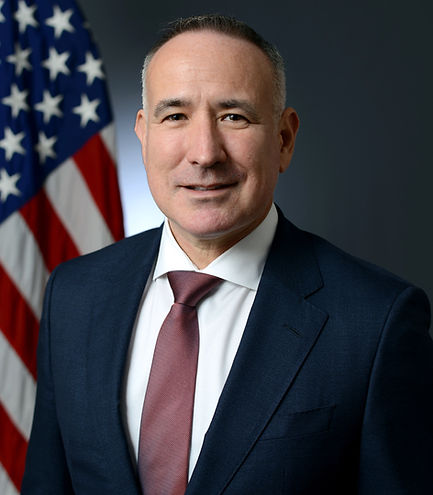
At the latest TCFR event on February 5 at the Tucson Country Club, retired U.S. Army Lieutenant Colonel and Foreign Area Officer Dr. Albert “Jim” Marckwardt delved into these questions. Both faculty co-lead for the Americas at Johns Hopkins SAIS and Professor of Strategy and Defense at the Inter-American Defense College, he served 29 years in senior policy and security roles, including several positions focused on Latin America. He deployed twice to Iraq and holds doctoral and master’s degrees from Johns Hopkins SAIS, is a graduate of Argentina’s Escuela Superior de Guerra, and writes on regional security and military diplomacy.
Drug Policy In Waves
It is no secret that there is a large amount of drug flow coming from countries like Colombia and Mexico, and in response drug policy in Latin America has evolved through several distinct “waves.” While trade structure has changed over time, Dr. Marckwardt utilized journalist Douglas Farah’s interpretation of such to describe the “fourth wave” of drug-related criminal activity that the region is now experiencing. Beginning with the first wave in the 1980s, cocaine produced in Colombia followed a relatively simple model of being transported north to the United States, while money and weapons flowed back south. As routes began to be disrupted by governmental enforcement, drug cartels had to adapt, creating a second wave that relied heavily on collaboration with Mexican drug cartels to traffick illicit goods across land. It is the large government involvement following this wave that led to the emergence of a third, when cartels began infiltrating and collaborating with governmental institutions to strengthen their drug trade industry.
While the first three waves share similarities and follow a steady north-to-south system, the fourth wave is vastly different. Since 2013, U.S. cocaine consumption has dropped by 40-50%, and yet Colombia cocaine production has increased by fivefold, according to Dr. Marckwardt. Drug markets have shifted to Europe, Africa, and other global destinations, with drug trafficking no longer limited to the Western Hemisphere. The world has become a “big marketplace.” This shift has contributed to an increase in violence associated with drug trafficking, particularly as traditionally gangs were not involved in the trade but are now, Dr. Marckwardt explained. He provided the example of Ecuador, where a violence increase has been connected to local gangs forming alliances with major cartels. As such, a new approach is required to address the issue multilaterally.
The Relationship Between Migration and Security
Migration and security within the Western Hemisphere share a deeply interwoven relationship, though not strictly causal. U.S. migration policy, particularly its provision of asylum for political refugees, has historically shaped regional dynamics. This was especially true during the Cold War in El Salvador and Guatemala, where U.S. support for local governments contributed to violence and forced many into displacement. Policy decisions later on, such as the 1994 U.S. immigration reforms that allowed the deportation of undocumented felons, unintentionally contributed to an expansion of gangs; many of those deported, such as individuals who had spent the majority of their lives in the U.S., were sent back to countries with weak state institutions and limited capacity to counteract the expansion of organized crime. By 2015, El Salvador had one of the highest homicide rates in the world, and in response to this some governments have adopted more aggressive security measures centered on strategies like mass incarceration that often raise civil rights concerns. Dr. Marckwardt questioned whether these strategies can last, but noted they continue to shape elections and policy in countries such as Ecuador, Costa Rica, Chile, and Peru. “They're willing to toss out civil rights to improve security.”. Public perception has also shifted significantly as migration has increased. In Chile, a poll asked about views on migrants and criminality, specifically whether Venezuelan migrants contributed to rising crime. In 2017, only approximately 30% believed as such, while in 2024 this number climbed to nearly 78%. Whether or not these beliefs reflect the reality of migrants and criminality, the perception itself has become increasingly influential.
Latin America once viewed migration and drug trafficking as U.S.-driven problems, but many countries now face these challenges domestically and are grappling with large-scale migrants in countries like Colombia. “How would the United States react if, all of the sudden, 17 million Venezuela migrants arrived?” Dr. Marckwardt asked. “That’s what has happened in Colombia, and Colombia does not have the sophistication and the development in their economy that the United States does.” The evolving perspective reflects major transformation in how governments and society understand migration and security today, raising questions and long-term implications for democracy in Latin America.
A Changing Focus in Latin America
It is a particularly interesting time in the Western Hemisphere. For years, Latin Americanists have called for greater attention to be placed on the region, whether this is additional funding, or more engagement. However, now that attention has arrived, there has been some uncertainty about what this means, Dr. Marckwardt explained. It is an evolving landscape, and the moment presents itself as an opportunity to look closer at the current administration, especially its overall security strategy. Latin America remains a unique region, often described as a “zone of peace” as it lacks major interstate rivalries or nation-state conflicts. And yet, paradoxically, it is also the most violent region in the world; Latin America accounts for 8% of the global population but accounts for nearly a third of all homicides in the world. Increased attention on the region stems largely from this unusually high rate, which has prompted actions such as a stronger military presence in the Caribbean.
Is Latin America the New Center of U.S. Foreign Policy?
Latin America is of large geopolitical importance, and has only increased as such — now ranking among top priorities in U.S. national security strategy and reflecting a significant shift in how the United States approaches the rest of the Western Hemisphere. Whether this prioritization is justified or not is open for debate, but regardless it points to a growing recognition of Latin America’s strategic importance in U.S. policy. A primary focus has been the large political investment the U.S. had made in confronting the government of Nicolás Maduro, an effort whose long-term outcomes are still questionable. The effects of this action have already been seen, including growing hope in Venezuela and discussions around future elections or potential political transactions. Additionally, regional dynamics are shifting — Cuba’s leadership has shown a willingness to negotiate with the Trump administration due to declining access to Venezuelan oil, and is one of the only countries that “sees the global picture,” according to Dr. Marckwardt. It is vital to maintain strong relations with actors such as these, as political tensions or shifts within partner countries can impact U.S. influence and a region’s stability.
An incredible amount of events are happening in the world right now, particularly within Latin America, and it shows just how much the region has evolved. “Everything I just described, just 10 years ago, would have been unfathomable,” Dr. Marckwardt stressed. What makes this particularly notable is that the region is in a constant state of evolution and change, a fact both exciting and unpredictable to follow. Political and social matters are constantly unfolding, and even popular culture reflects these changes — “I’m looking forward to the Super Bowl to see what Bad Bunny has to say,” Dr. Marckwardt finished. His observations reflect the complexity and ever-growing importance of Latin Americans on the world stage.


Comments