

As the United States continues to experience dramatic changes in executive power under the Trump Administration, national security and the rule of law are increasingly at stake. What are the legal and constitutional limits on the president’s authority? And are the actions taken consistent with international legal obligations and human rights standards? Many members had a chance to hear from Suzanne Spaulding in our October event on The Importance of The Rule of Law in Foreign Affairs, and in a TCFR member bonus event on December 3, William Banks, TCFR Vice President and Syracuse University Distinguished Professor, shared insights drawn from over four decades at Syracuse, including as Interim Dean of the College of Law and Founding Director of the Institute for National Security and Counterterrorism (INSCT), now the Institute for Security Policy and Law (SPL). In partnership with the League of Women Voters, who have been defending democracy in Tucson for 84 years and continue to advocate for public policy, reproductive rights, and justice reform, Banks drew on his expertise in constitutional and national security law, laws of war, cybersecurity, and emergency powers to discuss pressing threats to national security and the rule of law.
“Flood the Zone” Strategy
Since coming into office, the Trump administration has adopted a “flood the zone” strategy, which Banks described as “drinking from a fire hose” : nonstop, overwhelming governmental actions continue to create an unparalleled pace of change. Banks emphasized that he has never seen anything like this in terms of the speed, as well as the degree to which government actions are violating and testing the laws in countless ways that Americans have not witnessed before.
This dynamic itself reflects a broader contemporary problem: throughout the 20th and 21st centuries, the war-making power has increasingly overtaken Congress’ constitutional role in deciding war. In simpler terms, the power of Congress is slipping away from presidents who abuse this power. Although the last formally declared U.S. war was during World War II against Romania, modern conflicts rarely come with declarations at all and rather just unfold. In the U.S. system, war is supposed to begin only after a declaration from Congress, but Banks highlighted that over time that authority has slipped away, moving into the hands of aggressive executive branch actors. As a result, most executive initiatives are now undertaken at the behest of the president, and often target criminal organizations rather than traditional armed groups, raising serious questions about lawfulness and the constitutional separation of powers.
Illegal Orders Are Illegal
What does it mean for our democracy when members of the military are told they must follow orders that may be unlawful? Banks provided an example of when Pete Hegseth, Secretary of Defense, directed the Pentagon to investigate Senator Mark Kelly after Kelly told members of the armed services that they do not have to follow illegal orders - a true statement of what the law is. While Banks highlighted that Trump disliked this, Senator Kelly is, in fact, protected by the First Amendment. Kelly and other elected lawmakers had posted videos reminding the military that they are able to “refuse illegal orders,” emphasizing that following orders is not a defense if a soldier obeys an illegal command to commit a war crime, Banks provided an example referring to the Nazis after World War II. Service members have both the right and the obligation to refuse illegal orders. Trump issued a forceful response, claiming that behavior such as this is punishable by death.
Recent Caribbean Strikes
Banks posed a question: Is it legal to use lethal force to target suspected drug trafficking boats on high seas or kill those aboard the boat? Very few people outside the president’s inner circle view the recent Caribbean strikes as lawful, highlighting how far this justification strays from aligning with widely recognized legal views. Under both domestic criminal law and international human rights law, it is not legal to use lethal force to target suspected drug-trafficking boats on the high seas or to kill those aboard, as such actions constitute murder under U.S. law and extrajudicial killings under international law. As the United States is not in an armed conflict with drug traffickers, peace time law applies. In addition to this, federal laws prohibiting murder still govern, even on the high seas. The same is true under the Uniform Code of Military Justice, which criminalizes unlawful killings in both peacetime and armed conflict. International human rights law also applies extraterritorially - an obligation that the U.S. has long acknowledged - and forbids arbitrary killing outside self-defense. As Banks further explained, drug-trafficking groups do not meet the legal threshold of armed groups engaged in sustained violence against a state, and the individuals on these vessels are civilians who are legally required to be protected. For these reasons, Banks underscored that all 21 strikes that killed 83 people were unlawful, including actions such as killing shipwreck survivors or conducting “double-tap” strikes.
When is Domestic Use of the Military and National Guard Allowed?
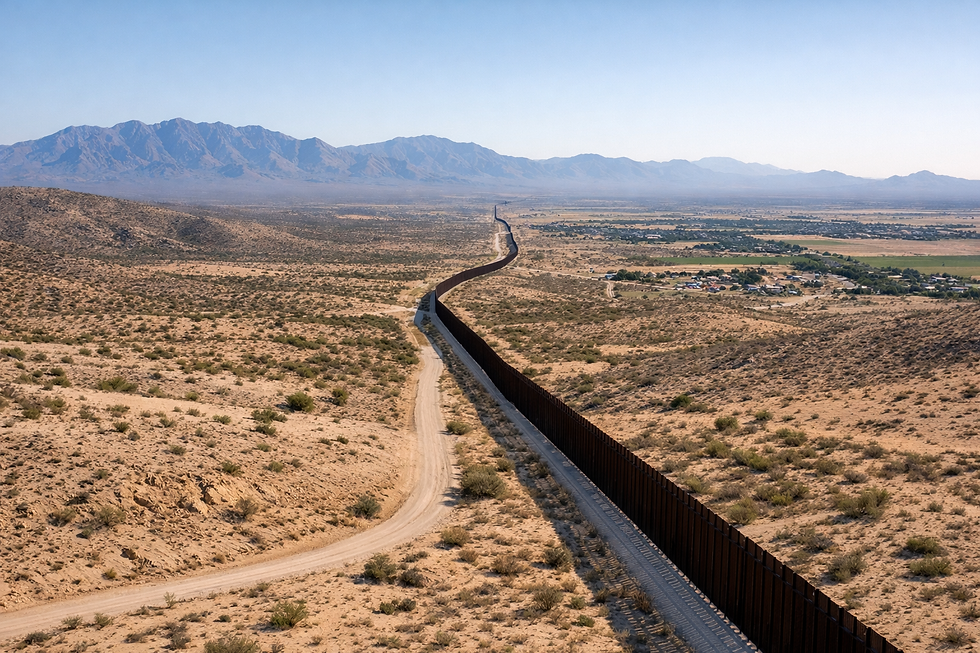
The domestic use of the military and deployment of the National Guard in U.S. cities has become a major issue after President Trump’s inaugural address, according to Banks, where he promised to “launch the largest deportation of criminals in American history” and “send troops to the border to defend the country from invasions.” Ten executive orders were issued on January 20, one declaring a national emergency at the southern border that Banks described was built around an “invasion rhetoric.” The administration attempted to ground its authority to do so in the Alien Enemies Act, one of several alien laws passed in 1798 at a time where dominant political parties feared non-citizens. The act allows a president to detain or deport any non-U.S. citizen born in that nation, once an invasion by a foreign nation is proclaimed. Historically, this has only been used during WWII to intern tens of thousands of non-citizens but Trump’s team argued that migration from Mexico and Latin America, combined with drug cartels, constituted an “invasion” justifying broader deportation powers. Banks emphasized that this push contrasts the long-respected U.S. tradition of entrusting domestic law enforcement to civilian police, rather than to the military, and provided an example of the Posse Comitatus Act (PCA). Under this act, military forces are presumed banned from domestic law enforcement unless another law authorizes it.
When Trump proposed deployments in states like California, Oregon and Illinois, state leaders rejected the move, and the issue is now being litigated in federal courts. Banks clarified that it is worth noting that states have stronger legal arguments because, in the federal system, National Guard decisions are meant to rest with governors unless the president invokes the Insurrection Act, or as Banks called, the “when all hell breaks loose” law. Though rarely used and last invoked in 1992 after the Rodney King beating, its broad language could allow a president to federalize immigration enforcement, a possibility many worry could bring military forces into cities to stop civilians, conduct searches, and enforce laws in ways the military is not trained to do. This in itself would be detrimental, but Banks emphasized there is a good chance that as a country we will see this implemented at some point in the Trump administration.


Comments