
On December 4, 2025, the 4th annual U.S.-Mexico Defense and Security Roundtable was hosted by the National Autonomous University of Mexico (UNAM) through the Center for Research on North America (CISAN), in collaboration with the University of Arizona-UNAM Binational Consortium on Migration, Human Rights and Human Security. The roundtables provide an opportunity for discussion and to enforce the relationship between UNAM and UA through high-level engagements and communication.
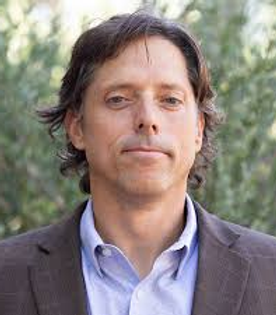
The bilingual event took place for the first time in Mexico City and was moderated by Dr. Roberto Zepeda Martínez, full time researcher at CISAN, and featured distinguished speaker Michael Burgoyne, TCFR board member and Assistant Professor of Practice at the University of Arizona. Burgoyne was joined in discussion by Yadira Gálvez, faculty of Political and Social Sciences at UNAM; Athanasios Hristoulas, ITAM; and Dr. Raúl Benítez Manaut, CISAN, UNAM.
The discussion began with an opening from Dr. Zepeda, underscoring the importance of the relationship between UNAM and UA, and introducing Burgoyne as the primary presenter of the roundtable. Burgoyne provided an overview of the ever-changing numbers of issues plaguing both Mexico and the United States, highlighting that every year the problems continue; while drug overdoses in the U.S. have declined, 80,000 die each year from overdoses. Mexico has plateaued at approximately 30,000 homicides each year - a number that has become the “new normal.” According to Burgoyne, there remains a level of frustration from Mexico at what has been going on, echoed by those in the U.S. under the Trump administration. The roundtable discussion covered various aspects of the bilateral U.S.-Mexico relationship, focusing on security cooperation, drug trafficking and migration challenges, trade and economic ties, and the broader implications of U.S. foreign policy decisions on Mexico.
Shifts in Drug and Border Strategy Under Trump
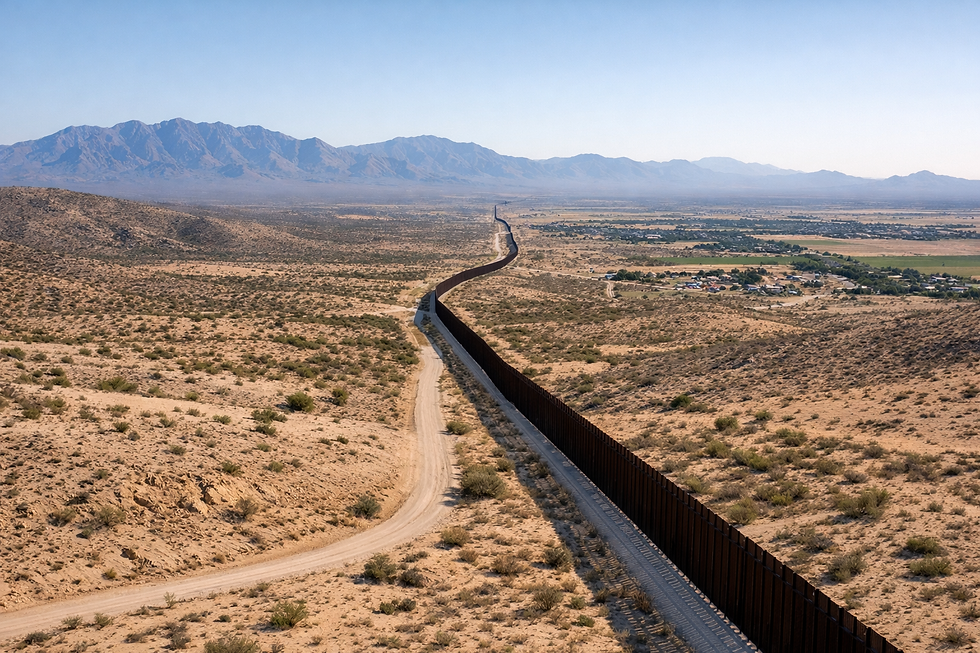
Burgoyne began his presentation by illustrating just how different of an approach the Trump administration has taken to drug policy and border security than in previous years. Drug prevention and treatment programs have been cut and shifted toward a supply-side, interdiction-focused strategy, choosing action against foreign producers of drugs: Burgoyne noted a policy trend where we are “going to go after the foreigners who are producing the drugs,” and other things in the U.S. we are “not going to be focusing on, or at least making a priority.” He emphasized that this shift is accompanied by a newer vision of border security that has militarized the border, in which adjacent land has been designated as a military installation, with 12,500 U.S. troops deployed to enforce security. Burgoyne noted that while illegal migration and migration from Mexico as a whole has declined significantly, at the same time under this pressure from the United States, Mexico has deployed 10,000 National Guard troops to its side of the border. This has resulted in a substantial influx of security personnel for both. According to Burgoyne, President Donald Trump, Vice President JD Vance, and Secretary of Defense Pete Hegseth have all stated that the U.S. could launch unilateral military strikes against Mexican transnational criminal organizations, and in response Mexico President Claudia Sheinbaum has consistently emphasized that while Mexico is willing to cooperate with the U.S., any violation of Mexican sovereignty would be unacceptable. Given the close economic ties between the two countries, unilateral strikes or any rupture of relations has the potential to be immensely disruptive; approximately $1.5 million in commerce crosses the U.S.-Mexico border every minute.
Complexities of Bilateral Cooperation and Shared Responsibility
In response to Burgoyne, Yadira Gálvez shared four elements necessary to thinking comprehensively about the fight against criminal organizations, and lessons from strategies so far. Firstly, within Mexico, the policiation of militaries and militarization of public security has not been the solution. Secondly, the new securitization of drugs and criminal organizations, including designating Mexican criminal groups as terrorist organizations, has operational, diplomatic, and legal consequences. Third, the war on drugs must be considered in the broader range of U.S.-China relations and U.S.-Russia relations, and the repositioning of the United States in the hemisphere, as well as how operational practices and political rhetoric shape the Mexico-U.S. relationship. Lastly, it is important to rethink bilateral cooperation beyond the typical framework, instead considering shared responsibility. Gálvez questioned the form of cooperation, wondering if it would be “one on the basis of both interests of Mexico and the United States, or one just thinking about the pressures that the United States exerts under Mexico?” Gálvez emphasized that the U.S. is essential to reducing domestic consumption and dismantling networks within its territory, but questioned the motives of the U.S. government compared to those of Mexico. “I think that we share a border and we share threats. However, our governments do not necessarily share perspectives, nor do they prioritize the same actions in confronting these challenges.”
Is There a Lack of Comprehensive Strategy in the U.S.?
Burgoyne expressed concerns that U.S. law enforcement resources have been diverted from counterterrorism and counter-drug efforts toward duties like migrant operations and domestic policing, leaving the United States without a sophisticated internal security strategy that shapes its relationship with Mexico. He stressed that to reduce overdoses, homelessness, and gang violence, this multifaceted problem requires comprehensive, tailored solutions on both sides of the border, since the challenges are shared. However, “I haven't seen a fully formed strategy in the United States,” Burgoyne emphasized. He noted that designating criminal groups as foreign terrorist organizations allows the government to target their finances but does not authorize military force, even as the administration has carried out lethal strikes in the Caribbean without publicly disclosed legal justification or clear authorization from Congress. As a result, Burgoyne warned that there is little preventing similar unilateral action in Mexico, even though Congress has not clearly authorized such action; “As long as people continue to convince the President and some of his close advisers that this isn't a great idea, then we won't see it. But I think the risk is certainly there.”
How Framing Undermines U.S.–Mexico Cooperation
Athanasios Hristoulas argued that the way problems are framed in the U.S.–Mexico bilateral relationship fundamentally undermines cooperation. Speaking as a Canadian from his own experiences, Hristoulas emphasized that unlike Canada-U.S. security relations, which are viewed from a cooperative point of view, the Mexico-U.S. relationship has long relied on a convenience argument based on supply and demand, where each side blames the other: Mexico points to the supply of weapons and U.S. drug consumption, whereas the U.S. focuses on the supply of drugs stemming from Mexico. Both countries switch between supply and demand arguments as it suits them, and this approach “hasn’t served us for a century,” reflecting a noteworthy absence of shared responsibility despite facing common threats of cartels, drugs, deaths in the United States, and guns in Mexico. He noted this is “oddly unique,” as it is rare for two countries confronting organized crime not to recognize it as a shared threat. In the broader geopolitical context, Hristoulas suggests U.S. actions in places like Venezuela are driven less by drugs than by China, fitting into what he describes as a “three empires” worldview: American, Russian, and Chinese. Hristoulas emphasized that China’s growing influence in Latin America is shaping U.S. strategy far more than fentanyl or cartel violence.
Contrasting U.S. Partnerships
Dr. Raúl Benítez Manaut delved into the strong Canada-U.S. defense relationship, which he emphasized is anchored in NORAD and Cold War cooperation, and contrasted this with the weaker, reactive U.S.-Mexico security relationship, driven largely by Mexican domestic politics and national security weaknesses. While Canada is a strategic partner in U.S. defense, Mexico’s relationship is shaped by trade negotiations, migration, and drug trafficking. He further highlighted how Trump’s tendency to mix trade with security, such as praising Mexico’s president while claiming cartel control over large territories, can make consistent diplomacy difficult. He noted that “Mexico is very weak around the world” due to a lack of clear Latin American foreign policy and having strained relations with countries like Ecuador and Peru, and unlike Canada, Mexico remains highly dependent on the U.S. due to few trade agreements elsewhere and is largely reacting to U.S. pressure rather than shaping their own agenda.
Mexico’s Place in the World
As is highlighted throughout the roundtable, Mexico is often viewed bilaterally rather than in terms of its global role or as a major power, yet it now faces a new multipolar environment that makes managing relations with the U.S. and other powers increasingly complex. Various questions arise regarding how Mexico will handle certain countries moving forward, as it is challenging to keep issues separated when Mexico must balance U.S. interests while navigating its broader foreign policy. As Burgoyne questioned, how will Mexico manage this? How is the U.S. going to deal with its own interest in Mexico? And how can President Sheinbaum keep President Trump “happy” enough where no “red lines” are crossed? The next few years will ultimately reveal how these issues unfold in real time.
The consortial partnership between UA and UNAM is just one of many initiatives that help maintain a collaborative relationship. In politically challenging times, when dialogue can be difficult, efforts like this provide a valuable opportunity for engagement and problem-solving.
Source: 4th Annual US-Mexico Defense and Security Roundtable https://www.youtube.com/live/KM1YdCctNp0


Comments